Rotary Cheese Grater vs. Box Grater: Which One for Which Job?
May 1, 2026 · Updated August 27, 2026
Match the tool to tonight’s dish and the rotary-vs-box question answers itself. Cheddar for pizza or mac and cheese: rotary, coarse drum. Parmesan at the table: rotary, fine drum. Latkes and hash browns: box grater, large holes. Soft cheese: box, or tear it. Big batches, tired wrists: rotary.
That is the honest version from a company that makes rotary graters: each tool has jobs it wins outright. Here is the dish-first breakdown, with the yield numbers and failure modes the spec sheets leave out.
| Tonight’s job | Reach for | Why |
|---|---|---|
| Pizza, mac and cheese, casseroles | Rotary, coarse drum | Fast volume, even shreds that melt uniformly |
| Parmesan over pasta, at the table | Rotary, fine drum | Fluffy fine shreds, fingers never near a blade |
| Latkes, hash browns, carrot salad | Box grater, large holes | Open surface handles wet, bulky vegetables |
| Fresh mozzarella, young soft cheese | Box grater or your hands | Soft cheese jams and smears inside a drum |
| Butter into pastry, chocolate curls | Box grater, large holes / slots | Frozen butter and chocolate need a flat pass |
| Citrus zest, garlic, nutmeg | Fine rasp | Neither the box’s star side nor a drum zests well |
Hard, Semi-Hard, and Soft Cheese Behave Like Different Foods
The single biggest variable is not the grater, it is moisture. Dense aged cheeses (Parmesan, Pecorino, aged Gouda) are dry enough to fracture cleanly, so they flow through a rotary drum beautifully. Semi-hard blocks (cheddar, Swiss, mozzarella loaf, Monterey Jack) grate well on either tool as long as they are cold. Young, high-moisture cheeses barely grate at all: they compress, smear, and clog whatever you push them through.
Two technique rules cover most frustration:
- Grate cold. Fifteen to twenty minutes in the freezer firms a block so it shears instead of smearing. This matters most for semi-soft cheese.
- Cut the block to fit. A rotary hopper takes a chunk, not a full brick. Slicing a block into three or four pieces before you start is thirty seconds well spent.
Grating for the Melt: Pizza, Mac and Cheese, Casseroles
This is volume work, and volume is where the rotary earns its counter space. The crank is a gear: mechanical leverage does the shearing, so a bowl of shreds costs you a fraction of the arm effort, and the drum’s geometry keeps every shred the same width, which means the cheese melts evenly instead of in patches.
Know your yield before you shop for the recipe:
| Cheese | Yield when grated |
|---|---|
| Cheddar, Swiss, Monterey Jack (semi-hard) | about 1 cup per 4 oz; an 8 oz block makes ~2 cups |
| Parmesan, Romano (hard, coarse grate) | about 1 cup per 3 oz |
| Hard cheese, fine grate | packs up to twice the volume of a coarse grate per ounce |
That last row is why recipes say “finely grated” or “coarsely shredded” instead of just cups: the same ounce of Parmesan can read as half a cup or a quarter cup depending on the drum you choose.
And grate fresh if the melt matters. Bagged pre-shredded cheese is coated with anti-caking agents (powdered cellulose or potato starch) so it pours freely, plus natamycin, a mold inhibitor applied at 5 to 10 parts per million. Peer-reviewed dairy research has found that consumer liking of melted shreds drops once the anti-caking coating passes about 3% of the shred’s weight. The coating that keeps the bag loose is exactly what keeps your sauce from going silky.
Finishing at the Table: The Parmesan Question
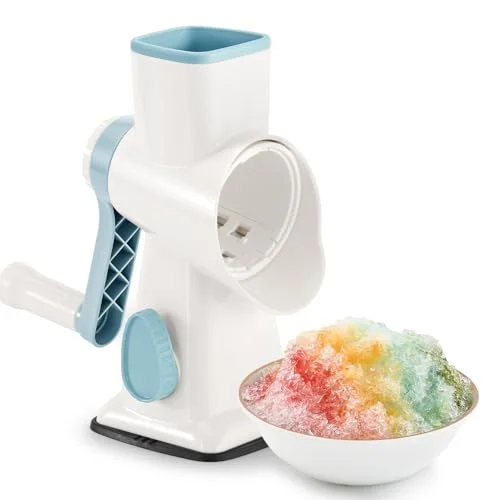
A rotary grater was practically invented for this moment; the drum-style design dates to 1940s France, built for exactly one task, making hard cheese rain over a plate. Two details make it work: use the fine drum for Parmesan (fine shreds melt into hot pasta on contact), and hand the whole thing to anyone at the table, because the enclosed drum means no exposed blade. It is the one grater a kid can operate safely.
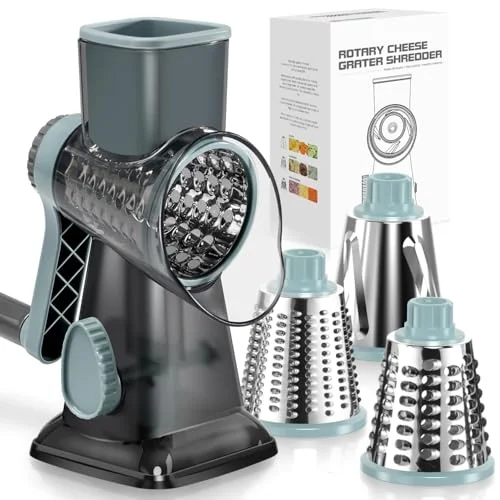
The KEOUKE rotary grater ships with three stainless drums (coarse, fine, slicing) and a suction base, so the table-side move and the pizza-night pile come from one tool. If you want a model-by-model ranking before choosing, the detailed best cheese grater comparison at cambom.org ranks box, rotary, and rasp models side by side.
Where the Box Grater Still Wins
An honest rotary maker’s list:
- Soft cheese. Fresh mozzarella and other young cheeses jam a drum and smear the barrel. The box’s open large-hole side, with the cheese firmed in the freezer first, handles them; so do your hands.
- Wet, bulky vegetables. Zucchini for fritters, potatoes for latkes: the box’s tall open face sheds moisture and takes a whole potato without pre-cutting.
- Four tools in one. Shred, fine-grate, slice, and (nominally) zest, no assembly, no parts to lose.
- Frozen butter and chocolate. A flat pass over large holes or the slot side beats loading crumbly pieces into a hopper.
- Zero setup. For two tablespoons of cheese on one bowl of soup, pulling out a drum and crank is overkill.
One buying note if you go the box route: look for etched holes rather than stamped ones. Etched teeth are chemically cut, so their edges are thinner and shear cleanly into fluffy shreds; stamped holes have a blunter raised rim that works slower and tires your arm faster.
The Box Grater’s Four Sides, Decoded
- Large holes: the everyday side; semi-hard cheese, potatoes, carrots, zucchini.
- Medium holes: firmer cheese, finer shreds for even melting.
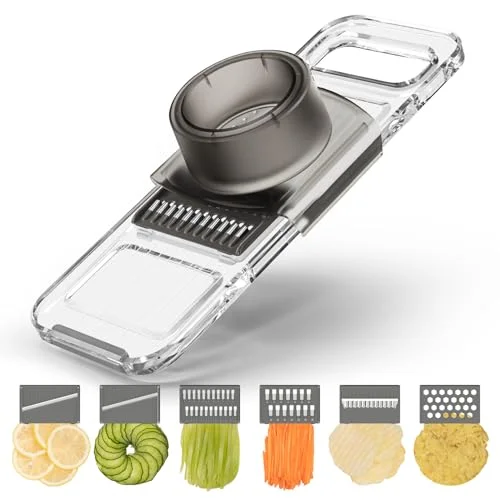
- Slot side: thin planks; cucumber, cheese slices, chocolate shards. For even slices at a set thickness, that job really belongs to a mandoline.
- Star side: the trap. Those spiky points mash and tear more than they grate. For citrus zest or nutmeg, a fine rasp does in seconds what the star side smears; skip it.
The Honest Downsides, Both Directions
Rotary: a small nub of cheese always survives inside the drum; blocks must be cut down to fit the hopper; suction bases grip laminate and stone but not wood or textured butcher block; and there are more parts to wash. Larger-hopper designs like the KEOUKE 5-in-1 reduce the pre-cutting, but the nub is physics: something has to hold the cheese against the drum.
Box: professional kitchens call it the knuckle buster for a reason; your grip is the only guard, the last inch of any block risks fingertips, big batches mean real forearm fatigue, and the fine sides clog with cheese that takes determined scrubbing.
Cleanup and Care, Same Rules for Both
Wash by hand with a dish brush, never a sponge; grater teeth eat sponges. Rinse before the cheese dries and either tool comes clean in under a minute; let cheese harden in a box grater’s fine holes or a drum’s teeth and you will earn that scrub. Skip the dishwasher when you can: heat and detergent dull cutting edges faster, and a dulled grater cannot be re-sharpened, on any grater, at any price.
Bottom Line
Grate more than a bag’s worth of cheese a week, or grate at the table, or have wrists that complain: get the rotary, use the fine drum for hard cheese and the coarse drum for the melt. Cook soft cheeses and wet vegetables more than anything else, or want one no-assembly tool: the box earns its drawer slot. The kitchens that stop thinking about grating own one of each and hand the rotary to the kids.
How We Sourced These Numbers
- Journal of Dairy Science, the 2021 anti-caking study: consumer liking of melted shreds drops once anti-caking coating exceeds about 3% of shred weight, regardless of the agent used.
- PBS SoCal, pre-shredded versus freshly grated cheese: the natamycin mold-inhibitor dose of 5 to 10 parts per million on bagged shreds.
- America’s Test Kitchen, grating cheese weight and volume: why fine grating can double the measured volume of hard cheese per ounce.
- Serious Eats, the cheese-grater roundup: the etched-versus-stamped tooth construction finding and the star-side zester verdict.
- Wikipedia, Grater and Mouli grater: grater history, the mechanical-leverage note, and the 1940s French origin of the rotary drum design.
Yield figures are working kitchen averages; a dense aged block and a young one from the same shelf will not grate to the same cup.
Frequently Asked Questions
Is a rotary cheese grater better than a box grater?
For volume, safety, and tired hands, yes: the crank's mechanical leverage does the work and the drum keeps fingers away from the blades. For soft, high-moisture cheese, occasional small jobs, and one-tool versatility, a box grater is still the better pick. Most serious kitchens end up owning both.
Can you grate soft cheese like fresh mozzarella in a rotary grater?
Not well. Soft, moist cheese compresses inside the drum, jams it, and smears into the barrel, which is tedious to clean. Firm the cheese in the freezer for 15 to 20 minutes and use a box grater's large holes, or simply tear fresh mozzarella by hand.
Is a rotary grater good for hard cheese like Parmesan?
Yes, it is the rotary's home turf. Use a fine drum rather than the coarse one: fine shreds melt into pasta instantly and pack about twice the volume per ounce. The enclosed drum also makes it the safest way to grate at the dinner table.
What are the four sides of a box grater for?
Large holes shred semi-hard cheese and vegetables for melting and latkes. The medium-hole side does firmer cheeses and finer shreds. The slot side slices thin planks of cheese or cucumber. The spiky star side mashes more than it grates; for zest, a fine rasp does a far better job.
How much shredded cheese does an 8 oz block make?
About 2 cups for semi-hard cheeses like cheddar, Swiss, or Monterey Jack, which run roughly 4 ounces per cup. Dense hard cheeses like Parmesan yield closer to 1 cup per 3 ounces, and fine grating can nearly double the measured volume compared to coarse shreds.
Why doesn't pre-shredded cheese melt as well as fresh-grated?
Bagged shreds are coated with anti-caking agents such as powdered cellulose or potato starch so they don't clump, and treated with natamycin, a mold inhibitor used at 5 to 10 parts per million. The coating that keeps shreds separate in the bag also keeps them from fusing into a smooth melt in your pan.
Should cheese be cold or room temperature before grating?
Cold. A warm block smears across the holes and gums up either tool. Fifteen to twenty minutes in the freezer firms up a block enough to grate cleanly, and it makes the biggest difference with semi-soft cheeses like mozzarella.
Are cheese graters dishwasher safe?
Check the model, but hand-washing is smarter either way: dishwasher cycles accelerate the dulling of the cutting edges, and no grater can be re-sharpened. Wash with a dish brush rather than a sponge, because grater teeth shred sponges.
Ready to grate faster?
KEOUKE Rotary Cheese Grater: 3 blades, suction base, dishwasher safe.
Shop on Amazon